
Signs Your Roof Needs Repair Now
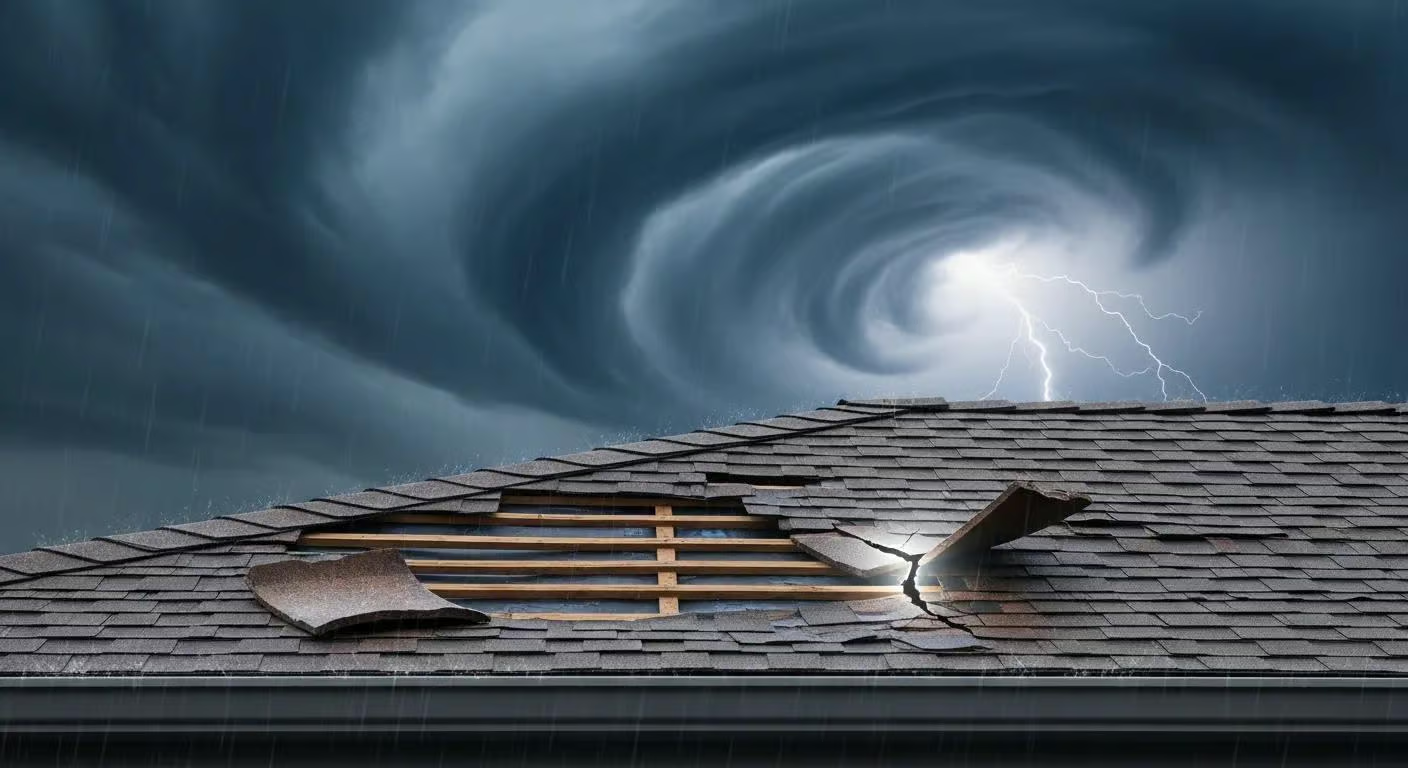
Is Your Roof in Danger?
A well maintained roof protects your home from weather and moisture. Many homeowners miss early signs of damage, which can lead to costly repairs and safety risks. This article outlines the common indicators that a roof needs attention, a practical inspection approach, when to contact a professional, and the cost factors to expect. Choosing a reputable provider such as
Baker Roofing Company
ensures experienced technicians and reliable solutions.
What Are the Common Roof Damage Signs to Watch For?
Early detection of roof damage reduces repair scope and expense. Homeowners should monitor a handful of clear indicators that signal the need for repair.
- Water Stains on Ceilings or Walls
: These stains often indicate leaks that can lead to significant water damage if not addressed promptly.
- Missing, Broken, or Curled Shingles
: Shingles that are missing, broken, or curling can compromise the roof’s integrity, allowing water to penetrate.
- Granules in Gutters
: The presence of granules in your gutters is a sign of shingle deterioration, which can lead to leaks and further damage.
How to Recognize Roof Leak Symptoms Early
Detecting a leak early limits interior damage and repair costs. Watch for a few consistent symptoms that indicate water intrusion.
- Water Stains on Ceilings
: These often appear as brown or yellow spots and indicate that water is seeping through the roof.
- Dripping or Damp Walls
: If you notice water dripping down or dampness on your walls, it’s a clear sign of a leak that needs immediate attention.
- Warped Floors
: Water damage can cause floors to warp, indicating that the leak has been present for some time.
Identifying Shingle Damage and Wear
Shingle deterioration reduces the roof’s protective function. Inspect for common forms of wear to assess the need for repair or replacement.
- Curled Shingles
: Shingles that are curling at the edges may need to be replaced to prevent leaks.
- Cracked or Brittle Shingles
: These can break easily and compromise the roof’s protective layer.
- Granule Loss
: If you notice a significant amount of granules in your gutters, it indicates that your shingles are deteriorating.
How to Conduct a Thorough Roof Inspection Checklist?
A structured inspection helps you find problems before they worsen. Use the following checklist to evaluate your roof methodically.
- Recognize Signs of Damage
: Look for visible signs of wear and tear, such as missing shingles or water stains.
- Document the Damage
: Take photos of any issues you find to keep a record for future reference.
- Call a Trusted Roofing Contractor
: If you identify significant damage, it’s crucial to consult a professional for a thorough assessment.
Step-by-Step Guide to Inspecting Your Roof Safely
Safety must guide every inspection. Follow a clear sequence of safe actions to minimise risk and obtain reliable observations.
- Remove Debris
: Clear any leaves or branches from the roof to get a clear view of its condition.
- Check for Algae
: Look for dark streaks, which can indicate algae growth that may require treatment.
- Inspect Gutters
: Ensure gutters are clear and functioning properly to prevent water buildup.
Tools and Techniques for Effective Roof Assessment
The right tools improve inspection accuracy and documentation. Choose methods that reveal both visible and hidden issues.
- Professional Inspection
: Hiring a professional can provide a comprehensive assessment of your roof’s condition.
- Photo Documentation
: Use a camera to document any damage for future reference.
- Moisture Readings
: A moisture meter can help identify hidden leaks that are not visible to the naked eye.
Modern inspection workflows increasingly incorporate Unmanned Aerial Systems (UAS) to improve safety and efficiency during roof assessments.
UAS for Safe & Efficient Roof Inspections
Traditional roof inspections are often slow and pose accessibility and fall risks. Recent adoption of Unmanned Aerial Systems (UAS) supports the inspection process by addressing these limitations. Maintenance teams report that UAS use can improve worker safety, reduce time and effort during data collection, and assist in identifying non‑conformities.
Using uas for roofs structure inspections at post-occupational residential buildings, R Melo, 2020
When Should You Repair Your Roof? Understanding Urgency Levels
Knowing when to act preserves the roof and limits damage. Certain signs warrant prompt or immediate repair to protect the structure and occupants.
- Water Stains on Ceilings
: If you see these, it’s essential to act quickly to prevent further damage.
- Missing, Broken, or Curled Shingles
: These can lead to leaks and should be addressed as soon as possible.
- Leaky Ceilings
: If you notice water dripping from your ceiling, it’s a clear sign that repairs are urgently needed.
Evaluating Damage Severity and Repair Timing
Assess the extent of damage to prioritise repairs effectively. Follow a consistent process to determine urgency and next steps.
- Recognize Signs of Damage
: Identify the extent of the damage to determine if it requires immediate attention.
- Document the Damage
: Keep a record of the damage to discuss with your roofing contractor.
- Get a Professional Inspection
: A professional can provide a detailed assessment and recommend the best course of action.
Emergency Roof Repair: When Immediate Action Is Needed
Some conditions require emergency response to limit interior damage and health risks. Identify these situations and arrange for immediate service.
- Visible Damage
: If you can see significant damage from the ground or roof level, it’s time to call for repairs.
- Signs of Water Entering
: If water is actively entering your home, immediate action is necessary.
- Sudden Increase in Energy Bills
: This can indicate that your roof is not providing adequate insulation, leading to higher energy costs.
What Does Roof Repair Cost? Factors Influencing Estimates
Repair costs vary by scope and site conditions. Understanding the primary cost drivers helps you plan a realistic budget.
Accurate cost estimation for maintenance and repairs is essential for effective facility management of long‑life assets such as buildings.
Roof Maintenance & Repair Cost Estimation
This study aims to identify key performance indicators and their correlations to develop a maintenance and repair cost estimation model for educational buildings using actual payment records. Financial estimation has become more important for facility management systems. Estimating maintenance and repair costs is essential for managing long‑life assets like educational buildings.
Development of a maintenance and repair cost estimation model for educational buildings using regression analysis, JM Kim, 2018
- Type of Roof
: Different roofing materials have varying costs associated with repairs.
- Cause of the Leak
: The source of the leak can affect the complexity and cost of the repair.
- Height and Complexity of the Roof
: Steeper or more complex roofs may require additional labor and safety measures.
Common Cost Components in Roof Repair Services
When estimating repair costs, account for labour, materials, and any inspection or access requirements. These components typically represent the bulk of the expense.
- Labor Costs
: This typically makes up a significant portion of the total repair cost.
- Materials
: The type of materials used will impact the overall expense.
- Inspection Fees
: Some contractors may charge for the initial inspection.
How to Get Accurate Roof Repair Cost Estimates
Combine online tools with a professional inspection to obtain a reliable estimate. Understanding the influencing factors improves budgeting and planning.
- Online Roof Estimate Calculator
: Use these tools to get a rough idea of potential costs.
- Professional Inspection
: A detailed inspection by a contractor can provide a more accurate estimate.
- Understanding Cost Factors
: Familiarize yourself with the factors that influence repair costs to better prepare for expenses.
Why Choose Professional Roof Repair Services from Baker Roofing Company?
Professional roofing services deliver consistent quality, compliance, and documented results.
Baker Roofing Company
provides experienced teams and reliable execution for effective repairs.
- Expertise
: With years of experience,
Baker Roofing Company
can accurately assess and repair your roof.
- Licensing and Insurance
: Professional services ensure that your repairs are covered and compliant with local regulations.
- Warranty
: Many professional services offer warranties on their work, providing peace of mind.
Benefits of Expert Roof Damage Assessment and Repair
A professional assessment uncovers concealed issues, prevents escalation, and reduces risk. These outcomes protect your property and finances.
- Identifying Hidden Damage
: Experts can spot issues that homeowners might miss.
- Preventing Major Problems
: Early detection can prevent more extensive and costly repairs.
- Enhancing Safety
: Professionals follow safety protocols to ensure a safe repair process.
How to Request a Consultation or Quote for Your Roof Repair
Initiating service with
Baker Roofing Company
is straightforward. Follow the simple contact options below to request an assessment or quote.
- Fill Out the Contact Form
: Provide your details for a prompt response.
- Call Directly
: Reach out via phone for immediate assistance.
- Email for Inquiries
: Send an email to discuss your roofing needs and request a quote.
Frequently Asked Questions
What are the long-term consequences of ignoring roof damage?
Ignoring roof damage can cause structural deterioration, persistent leaks, mould growth, and higher energy costs. Water infiltration weakens walls and ceilings and can lead to expensive repairs. Extended moisture exposure also creates conditions for mould, which affects health. Over time, unresolved issues may require a full roof replacement, which is costlier than timely repairs.
How often should I inspect my roof for damage?
Inspect your roof at least twice yearly, typically in spring and fall. Also check after significant storms or hail events. Regular inspections help detect issues early and reduce the likelihood of major repairs.
Can I perform roof repairs myself, or should I hire a professional?
Minor tasks, such as replacing a few shingles, may be manageable for some homeowners. For substantial repairs, hire a professional. Licensed contractors bring expertise, safety equipment, and code compliance, and they can identify underlying issues that are not obvious.
What should I do if I notice a roof leak?
Act quickly to limit damage. Move valuables away from the affected area and contain drips with containers. Contact a qualified roofing contractor promptly to assess the leak and perform repairs. Delaying action increases repair scope and cost.
What are the signs that my roof may need replacement instead of repair?
Replacement is likely when shingle damage is widespread, when the roof structure sags, or when multiple persistent leaks occur. If the roof is nearing the end of its expected life (commonly 20–30 years for asphalt shingles), replacement may be more economical than repeated repairs.
How can I improve the lifespan of my roof?
Regular maintenance extends roof life. Schedule routine inspections, keep gutters clear, remove debris, and ensure proper ventilation to avoid moisture buildup. Apply protective treatments where appropriate and address damage promptly to prevent escalation.
Conclusion
Recognising roof issues early preserves safety and reduces long‑term costs. Address water stains, missing shingles, and leaks promptly to protect your home. For professional inspection and dependable repairs, consider contacting a qualified roofing firm such as
Baker Roofing Company
to schedule a consultation.


