
Driveway Sealing Cost Guide: Pricing Factors, Types, and What to Expect
Driveway sealing is an essential maintenance task that protects your driveway from weather damage and wear, ultimately extending its lifespan. Understanding the costs associated with driveway sealing can help homeowners make informed decisions about their maintenance budgets. This guide will explore the various factors influencing driveway sealing costs, the types of sealers available, the typical sealing process, and the benefits of regular maintenance. Additionally, we will provide insights on how to obtain accurate cost estimates for driveway sealing services. By the end of this article, you will have a comprehensive understanding of driveway sealing costs and what to expect from the process.
While driveway sealing is often recommended, some research questions its overall cost-effectiveness and necessity.
Driveway Sealing: Is It Cost-Effective?
The subject of increasing controversy in the United States in recent years is whether both these lines of defense are necessary, or whether it might be more cost-effective not to seal the pavement.
To seal or not to seal? A field experiment to resolve an age-old dilemma, 2001
What Are the Key Factors Influencing Driveway Sealing Prices?
Several factors can significantly impact the cost of driveway sealing. Understanding these elements can help homeowners anticipate expenses and make informed decisions regarding their driveway maintenance.
How Does Driveway Size Affect Sealing Cost?
The size of your driveway is one of the most significant factors affecting sealing costs. Larger driveways require more sealant and labor, leading to higher overall expenses. For instance, a standard two-car driveway may cost between $200 to $400 to seal, while larger driveways can exceed $800. The amount of sealant needed directly correlates with the driveway’s square footage, making size a critical consideration in pricing.
What Role Does Driveway Material Play in Pricing?
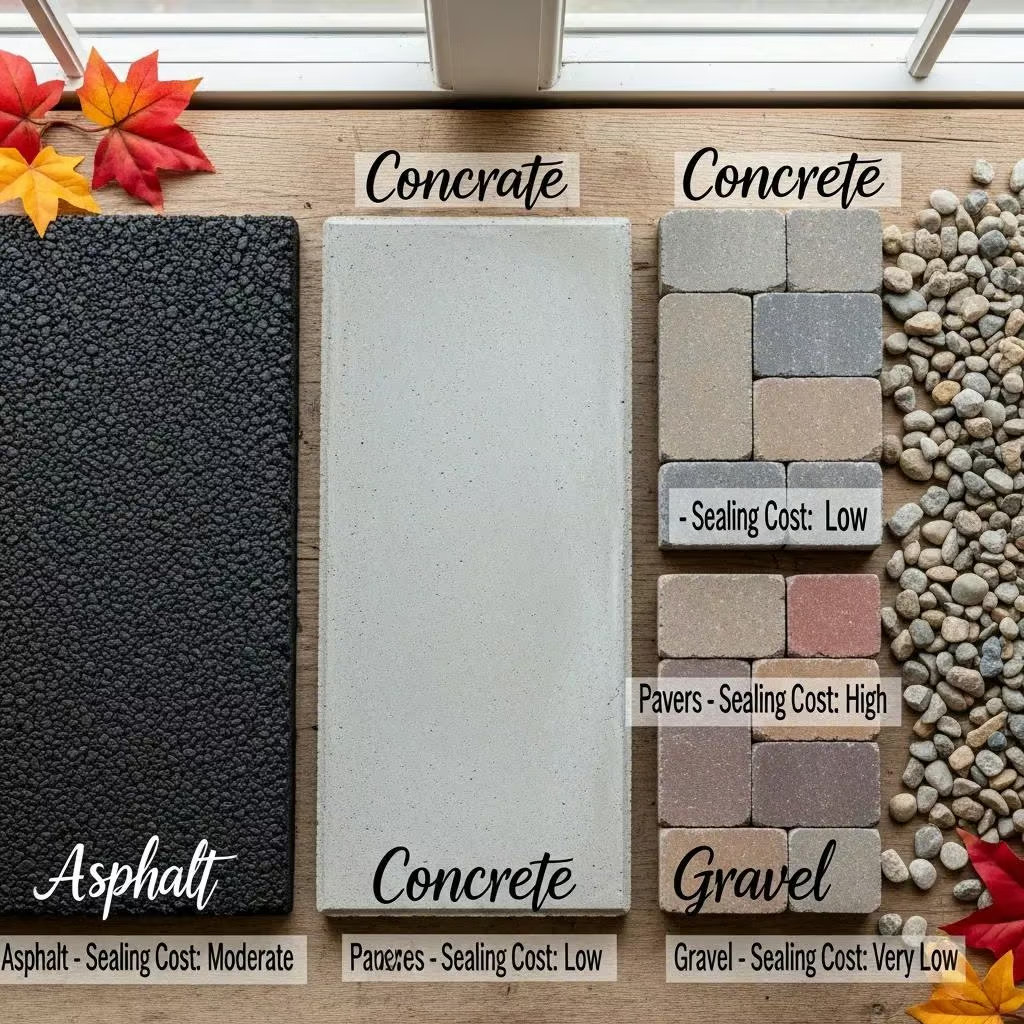
The material of your driveway also influences sealing costs. Asphalt driveways are generally less expensive to seal than concrete driveways. Asphalt sealing typically ranges from $0.15 to $0.30 per square foot, while concrete sealing can cost between $0.50 to $1.25 per square foot. Additionally, the longevity and maintenance requirements of different materials can affect long-term costs, making material choice an essential factor in driveway sealing pricing.
Which Types of Sealers Are Available and How Do They Affect Cost?
There are various types of sealers available, each with its own cost implications. Understanding these options can help homeowners choose the best product for their needs.
What Are the Differences Between Asphalt and Concrete Sealers?
Asphalt sealers are generally cheaper and easier to apply than concrete sealers. They provide a protective layer that enhances the appearance of the driveway while preventing damage from UV rays and water. In contrast, concrete sealers, while more expensive, offer superior durability and protection against stains and wear. The choice between these sealers will depend on the specific needs of the driveway and the homeowner’s budget.
Are Eco-Friendly Sealers More Expensive?
Eco-friendly sealers tend to be more expensive than traditional options. These sealers are made from sustainable materials and are designed to minimize environmental impact. While the initial cost may be higher, eco-friendly sealers can offer long-term savings by reducing the need for frequent reapplications and providing better protection against the elements.
Beyond traditional options, innovative and sustainable solutions like Asphalt Rubber Chip Seals are emerging as cost-effective and environmentally friendly alternatives for pavement maintenance.
Asphalt Rubber Chip Seals: Cost-Effective & Sustainable Pavement
Asphalt Rubber Chip Seals provide a durable, cost effective, and environmentally friendly alternative to traditional paving methods by incorporating recycled waste tires. This study evaluates Asphalt Rubber Chip Seals implementation in Arizona and Michigan comparing its effectiveness to conventional paving approaches and the current applications in California. Variations in state funding for road maintenance significantly impact infrastructure quality and longevity, influencing the choice of paving solutions. ARCS has demonstrated resilience in extreme weather conditions, making it a viable option for expansion to states like Arizona and Michigan, where climate variations pose challenges for pavement longevity. The research assesses construction costs, maintenance frequency, and sustainability benefits to determine ARCS’ competitiveness in the road maintenance industry. Findings suggest that ARCS reduces construction costs, accelerates application timelines, and provides
Asphalt Rubber Chip Seals a Cost Effective and Sustainable Solution for Road Infrastructure, 2025
What Is the Typical Driveway Sealing Process and Preparation?
Understanding the sealing process can help homeowners prepare for the service and ensure optimal results.
How Does Surface Preparation Influence Overall Cost?
Proper surface preparation is crucial for effective sealing. This process may involve cleaning the driveway, filling cracks, and repairing any damage. Neglecting these steps can lead to higher costs in the long run, as improper sealing can result in premature wear and the need for additional maintenance. Homeowners should expect to pay extra for preparation services, which can add $50 to $200 to the total cost.
Further studies have also explored the economic viability of sealing, particularly concerning its impact on pavement performance and the significant public funds allocated to such maintenance.
Driveway Sealing Cost-Effectiveness & Pavement Performance
The sealing and resealing of joints and cracks in PCC, HMA, and composite pavements is assumed to be an important component of pavement maintenance. Recently this practice has been challenged by research indicating that sealing may not be cost-effective. The Indiana Department of Transportation currently spends approximately four million dollars annually to perform joint/crack sealing. The primary objective of the research presented in this report is to investigate the costeffectiveness of joint/crack sealing in relation to pavement performance.
Initial study for cost-effectiveness of joint/crack sealing, KA Galal, 2003
What Are the Steps Involved in Applying Driveway Sealer?
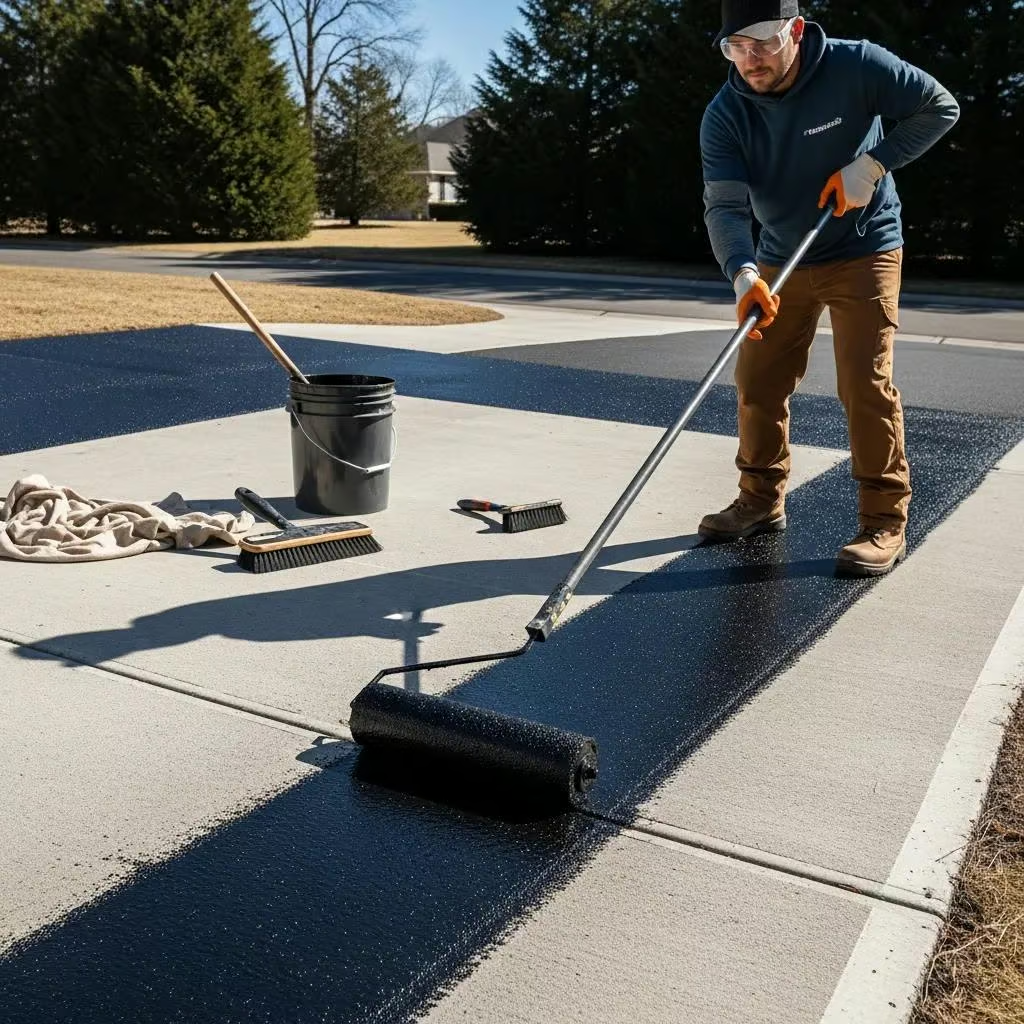
The application of driveway sealer typically involves several steps:
- Cleaning the Surface: Removing dirt, debris, and oil stains to ensure proper adhesion.
- Repairing Damage: Filling cracks and holes to create a smooth surface.
- Applying the Sealer: Using a sprayer or roller to evenly distribute the sealant.
- Curing Time: Allowing the sealer to dry for a specified period before using the driveway.
These steps are essential for achieving a durable and effective seal.
What Are the Benefits of Driveway Sealing and Maintenance Expectations?
Sealing your driveway offers numerous benefits that can enhance its longevity and appearance.
How Does Sealing Protect Your Driveway Investment?
Sealing protects your driveway from weather damage, UV rays, and oil spills, which can lead to costly repairs if left untreated. By investing in regular sealing, homeowners can prevent deterioration and extend the life of their driveways, ultimately protecting their property investment.
How Often Should Driveways Be Sealed for Optimal Maintenance?
The frequency of sealing depends on the material and usage of the driveway. Generally, asphalt driveways should be sealed every 2-5 years, while concrete driveways may require sealing every 3-7 years. Regular maintenance ensures that the driveway remains in good condition and can help avoid more significant repair costs in the future.
How Can You Obtain Accurate Driveway Sealing Cost Estimates?
Getting accurate cost estimates is crucial for budgeting and planning your driveway maintenance.
What Should You Expect in a Professional Sealing Service Quote?
When requesting a quote for driveway sealing, homeowners should look for clear communication regarding the scope of work, materials used, and total costs. A detailed quote should include the price per square foot, any additional fees for preparation, and warranty information for the sealing service.
How to Request a Consultation or Quote from Experts?
To obtain a quote, homeowners can contact professional sealing services directly. For instance, Baker Roofing Company offers consultations and can provide detailed estimates for driveway sealing. Interested individuals can reach out via phone at 855-ROOF-777 or email at [email protected] to discuss their specific needs and receive tailored quotes.
Different sealing services offer various pricing structures and benefits. Below is a comparison of common sealing services and their costs.


