
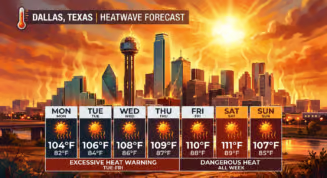
Texas Heat Roof Damage: Warning Signs to Watch in Dallas-Fort Worth
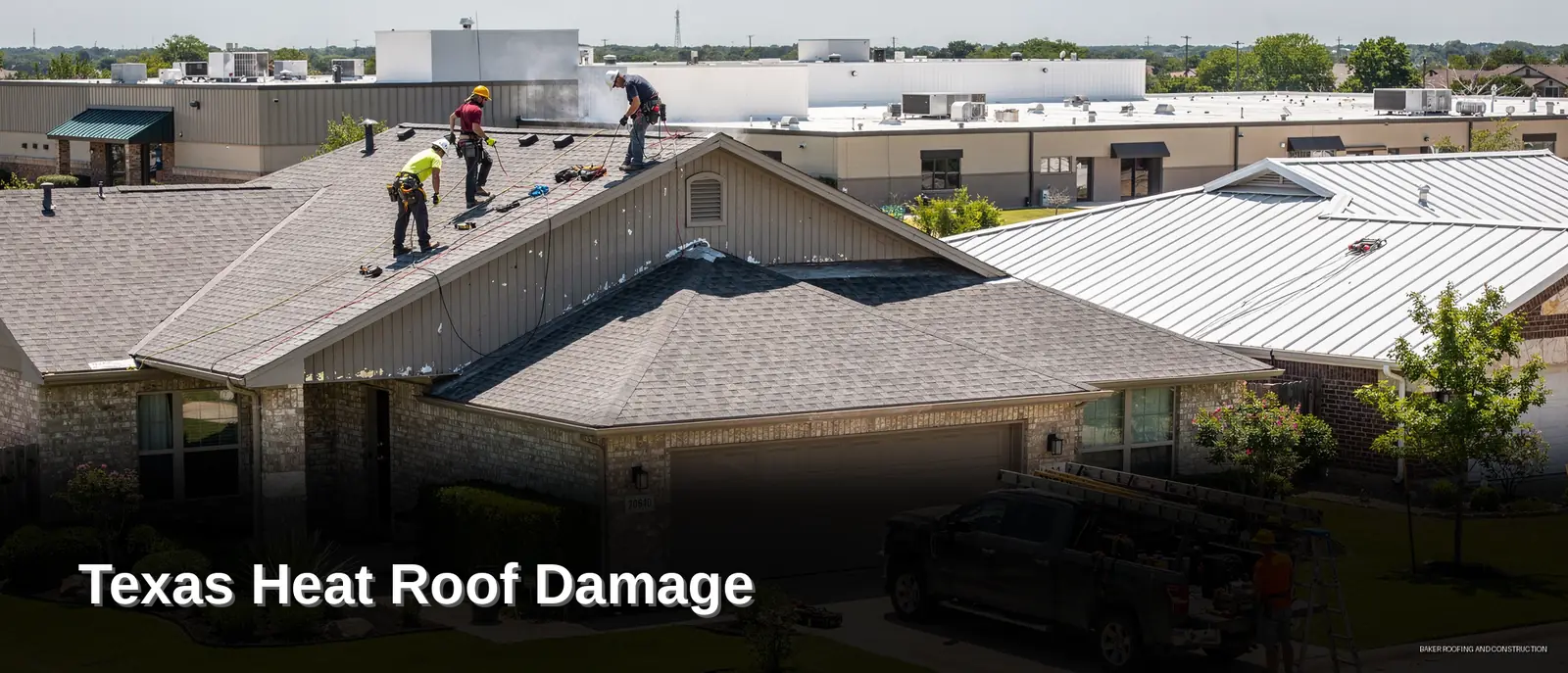
By Baker Roofing and Construction Editorial Team · Updated 2026-08-31
Extreme Texas heat damages Dallas-Fort Worth roofs through prolonged UV exposure, curling shingles, cracking sealants, and stressing flashing during summer months. Warning signs include granule loss in gutters, blistering sh
Key Takeaways
-
Texas summers cause gradual roof deterioration through months of intense sunlight and prolonged UV exposure.
-
Shingles absorb direct sunlight daily while attic temperatures climb, causing materials to expand and contract repeatedly.
-
Heat-related damage shortens roof lifespan and leads to costly repairs if homeowners ignore warning signs.
-
Slow heat damage develops over weeks of extreme weather before visible leaks or interior problems appear.
Can Extreme Texas Heat Really Damage Your Roof?
Yes — sustained summer sun causes real, measurable texas heat roof damage across Dallas-Fort Worth. Months of intense sunlight and prolonged UV exposure gradually wear down roofing materials, even on homes with no visible leaks or storm history. Left unaddressed, that slow deterioration shortens roof lifespan and turns minor wear into costly repairs.
DFW roofs face a physics problem most homeowners never see. Surface temperatures on a roof can climb well above the surrounding air temperature, placing constant stress on shingles, flashing, and other components. That stress builds daily, cycle after cycle, throughout a North Texas summer.
Storm damage tends to grab headlines, but heat deserves equal attention. Hail and heavy rain cause dramatic, visible damage. Heat works quietly, weakening materials over weeks without a single obvious sign. Which is exactly why it catches so many DFW homeowners off guard.
Why is North Dallas heat so hard on roofs specifically?
North Dallas summers combine intense UV exposure, soaring temperatures, and fast-moving storms in the same season. That combination forces roofs to work overtime, often without any obvious warning sign from the ground. Roofs absorb this stress daily, well before a homeowner notices trouble inside the attic or on the ceiling.
Homeowners weighing risk factors should note that heat-related wear shows up through:
-
Shingle blistering heat damage from trapped moisture and gas expansion
-
Roof thermal expansion north texas cycles that loosen fasteners and seams
-
Reduced flashing integrity around vents, chimneys, and valleys
-
Gradual granule loss that accelerates UV penetration
A professional DFW roof inspection catches these patterns before they become emergencies.
What Warning Signs Show From the Ground?
Curled, cupped, or wavy shingles reveal themselves easily from a driveway or sidewalk in Frisco, Arlington, or anywhere across the Metroplex. These distortions signal texas heat roof damage and aging materials long before a leak appears indoors. A homeowner scanning the roofline after a long August stretch may notice edges lifting or waves rippling across a slope that once lay apartment.
Most roof heat damage signs do not announce themselves with a dramatic ceiling stain. Instead, damage builds quietly, surfacing only after weeks of relentless sun and soaring attic temperatures. That slow timeline is exactly why a routine visual check matters more in North Texas than in milder climates.
How does summer sun weaken shingles over time?
Constant sun exposure dries shingles out and weakens their protective coating across a DFW summer. Materials expand and contract repeatedly as daytime highs give way to cooler nights, a cycle tied directly to roof thermal expansion north texas homeowners experience each season. Heat and moisture also collect in the attic, adding stress from below while the sun bears down from above.
Older roofs, or ones already carrying storm scars, tend to show wear faster once summer heat sets in. All homeowners, regardless of roof age, should watch the surface closely during peak heat months. Even newer installations can show early signs of heat-related wear.
What should a ground-level check cover?
A simple visual sweep can catch trouble early:
-
Curled or lifted shingle edges
-
Wavy or uneven rooflines
-
Patches of granule loss visible from below
-
Dark or discolored streaks near the ridge
Scheduling a professional dfw roof inspection confirms what the ground view suggests and catches issues invisible from the yard.
How Does Heat Cause Shingle Blistering and Expansion?
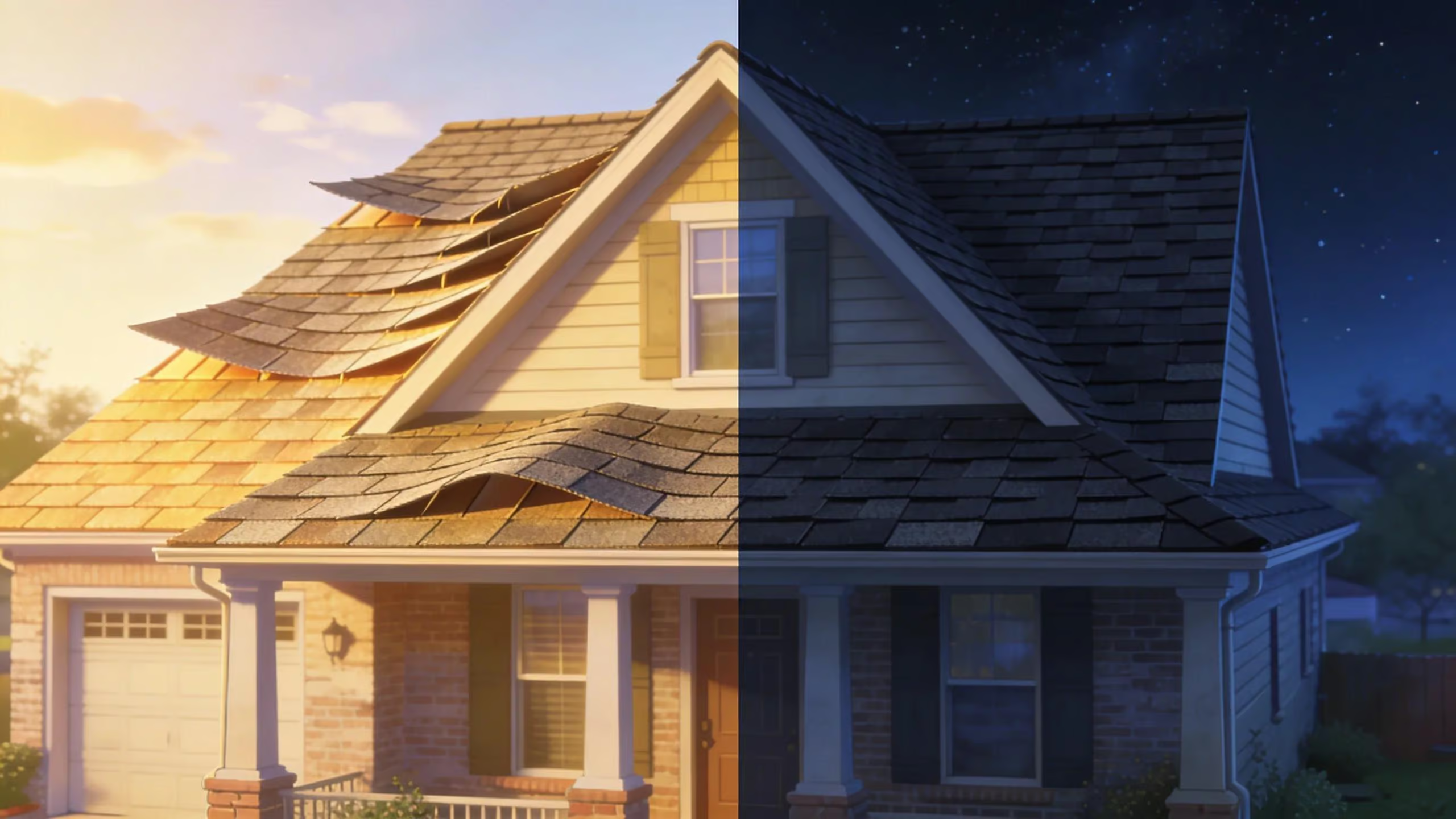
Repeated heating and cooling cycles cause shingle blistering heat damage. Drive roof thermal expansion north texas homeowners notice most in July and August. Asphalt shingles swell as surface temperatures climb, then contract once the sun drops. That daily push-and-pull weakens the granule bond and the adhesive seals holding each shingle in place.
A Dallas-Fort Worth roof can absorb significant solar energy, depending on its design and materials. Surface temperatures on the roof deck climb well above the surrounding air temperature, sometimes turning shingles into something closer to a stovetop than a building material. That heat load doesn’t stay on the surface, either — it radiates downward into the attic, raising temperatures inside the home’s structure.
Why Do Shingles Blister in Extreme Heat?
Blisters form when trapped moisture or gas beneath the shingle surface expands faster than the material around it. Under sustained texas heat roof damage conditions, asphalt softens, sealants weaken, and flashing points come under added stress. Small imperfections that seemed harmless in spring often turn into raised bubbles, cracked granules, or curling edges by late summer.
What Happens Inside the Attic When Temperatures Spike?
Attic heat compounds the damage happening above it. Poor attic heat roof ventilation dallas systems trap warm air against the roof deck, accelerating shingle aging from underneath. This combination — sun above, heat below — shortens roof lifespan faster than either factor alone.
The cumulative effect matters most. Day after day of expansion and contraction gradually weakens the entire roofing system, even without a single storm or leak. A licensed dfw roof inspection identifies blistering, softened sealant, and flashing stress before minor wear becomes a costly residential roof repair dfw project. Catching these signs early protects both the roof and the home’s long-term value.
Why Does Attic Ventilation Matter in DFW Heat?
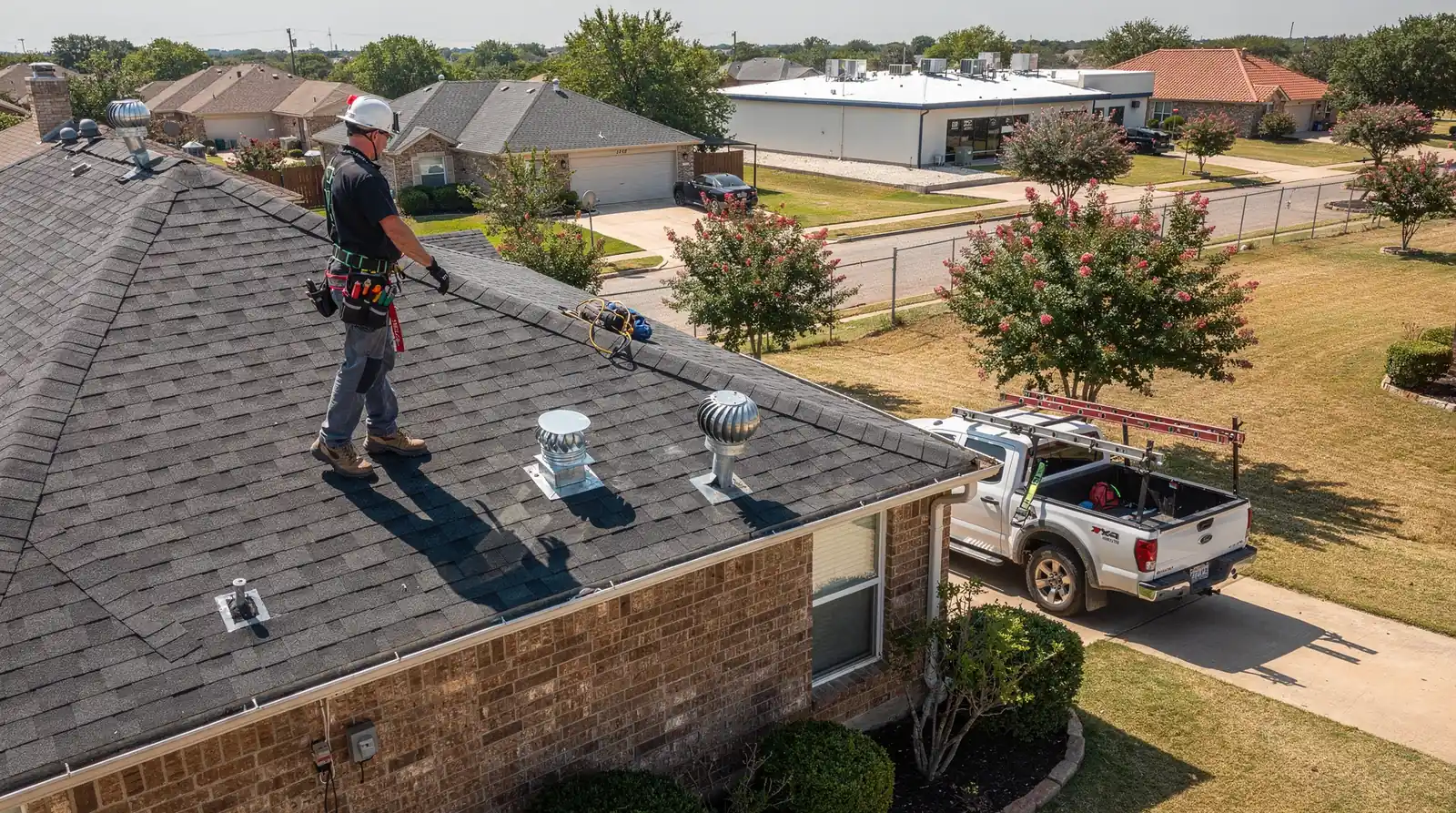
Airflow above the ceiling line determines how much punishment a roof absorbs each summer. Ventilation ranks as one of the most important. Most overlooked, factors in how a DFW roof performs once temperatures climb into triple digits. Homes across North Texas endure months of relentless sun. Without a clear path for hot air to escape, that heat has nowhere to go but down into living spaces.
Texas heat roof damage builds gradually rather than all at once. Extended exposure quietly accelerates aging across North Dallas homes over the course of a single summer season. Shingles dry out and weaken under constant sun, roofing materials expand and contract with every temperature swing, and heat combined with trapped moisture puts steady stress on the entire system.
Does better ventilation actually protect a roof?
Yes. A properly ventilated attic regulates temperature, easing the load on roofing materials during the hottest stretches of the year. That regulation also reduces strain on the home’s HVAC system and supports better energy efficiency, which extends the working life of the roof itself.
What happens if attic airflow gets ignored?
Left unaddressed, prolonged heat stress shortens a roof’s lifespan. It also raises the odds of leaks or insulation problems developing over time. A thorough DFW roof inspection typically checks attic airflow alongside shingle condition, since the two issues often develop together.
Homeowners weighing repair versus proactive maintenance should treat attic heat roof ventilation Dallas assessments as a summer essential:
-
Confirm intake and exhaust vents remain unobstructed
-
Check for musty odors or excess attic warmth
-
Watch energy bills for unexplained seasonal spikes
What Should DFW Homeowners Do Next?
Three steps matter most this summer: watch for warning signs, act early, and schedule a professional look before small stress turns into a leak. Panic solves nothing. Spotting roof heat damage signs early and taking the right next step keeps minor wear from becoming a costly repair bill for homes across Dallas-Fort Worth.
Staying ahead of damage protects more than shingles. It protects the roof’s long-term lifespan and the home’s resale value in a market where buyers scrutinize roof condition closely.
How can DFW homeowners check for heat damage without climbing a ladder?
A pair of binoculars and a walk around the property reveal plenty. Look for curling, cracked, or discolored shingles from the ground, and check the attic for trapped heat or discolored insulation. Anyone unsure what they’re seeing should request a professional DFW roof inspection rather than guess.
When should a homeowner call a roofing contractor?
Once cracking, blistering, or granule loss appears, waiting rarely helps. Baker Roofing and Construction, based in Dallas, TX, serves homeowners throughout Dallas-Fort Worth and offers free inspections for residential roof repair DFW needs.
Practical next steps include:
-
Inspecting shingles visually each season for curling or blistering
-
Checking attic spaces for excess heat buildup
-
Requesting a professional inspection before listing or refinancing a home
-
Addressing minor wear before the next heat wave arrives
Small, early actions now prevent expensive surprises later.
FAQ
What causes texas heat roof damage in Dallas-Fort Worth?
Prolonged UV exposure, curling shingles, cracking sealants, and stressed flashing during summer months cause
Conclusion
In closing, extreme Texas heat poses genuine risks to your roof’s longevity and performance. By recognizing the warning signs—from granule loss and cracking to premature aging. Membrane deterioration—you can address damage before it becomes costly. Regular inspections and prompt repairs protect your home’s integrity and extend your roof’s lifespan. When you notice these indicators, professional assessment ensures your roof withstands the demanding DFW climate for years to come.


