
Roof Repair Insurance Claims: How to Get Your Insurer to Pay for Damage
Roof Repair Insurance Claims: How to Get Your Insurer to Pay for Damage
Navigating the complexities of roof repair insurance claims can be daunting for homeowners. Understanding how to effectively file a claim and maximize your insurance payout is crucial for ensuring that you receive the financial support needed to address roof damage. This article will guide you through the essential steps involved in assessing roof damage, filing a claim, and working with insurance adjusters. Additionally, we will explore common pitfalls that can lead to claim denials and how to avoid them. By the end of this guide, you will be equipped with the knowledge to handle your roof repair insurance claims confidently.
How Do I Assess Roof Damage for an Insurance Claim?
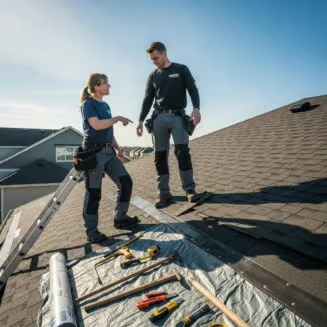
Assessing roof damage is the first critical step in filing an insurance claim. It involves a thorough evaluation of the roof’s condition to determine the extent of the damage and the necessary repairs. Proper documentation of the damage is essential, as it serves as the foundation for your claim. Homeowners should consider contacting a trusted roofing contractor to assist with this process, ensuring that all damage is accurately reported and assessed. Understanding your options for repairs will also help you make informed decisions moving forward.
What Types of Roof Damage Are Covered by Insurance?
Insurance policies typically cover various types of roof damage, including:
- Hail Damage: Damage caused by hailstones can lead to significant issues, including leaks and structural integrity concerns.
- Wind Damage: High winds can lift shingles or cause other forms of damage that may be covered under your policy.
- Fire and Smoke Damage: Roofs damaged by fire or smoke are generally covered, provided the cause aligns with your policy’s terms.
- Storm Damage: Damage caused by storms, including heavy rain, snow, or fallen trees, is often covered under standard policies.
Advanced methods, including deep learning, are increasingly being developed to accurately assess and detect specific types of roof damage like hail.
Roof Damage Assessment: Hail Detection & Deep Learning
for roof damage detection based on deep learning methods; 2) we introduce the first dataset for assessing rooftop hail damage, which is publicly available (see Section 2); and 3) we recommend a collection methodology to build similar datasets.
Roof damage assessment using deep learning, C Kanan, 2017
Understanding the specific types of damage covered by your insurance policy is vital for a successful claim.
How to Conduct a Professional Roof Damage Inspection for Claims
Conducting a professional roof damage inspection involves several key steps:
- Document All Damage: Take clear photographs of the damage from multiple angles to provide visual evidence for your claim.
- Schedule an Adjuster Inspection: Contact your insurance company to arrange for an adjuster to assess the damage.
- Understand Your Rights: Familiarize yourself with your insurance policy to know what is covered and your rights during the claims process.
- Hire a Licensed Roofing Professional: Consider hiring a licensed roofing contractor to provide a detailed inspection report that supports your claim.
A thorough inspection ensures that all damage is accounted for, which is crucial for a successful claim.
What Is the Step-by-Step Process to File a Roof Repair Insurance Claim?
Filing a roof repair insurance claim involves a systematic approach to ensure that all necessary steps are followed. This process can significantly impact the outcome of your claim.
- Document the Damage: Start by taking detailed photographs and notes of the damage to your roof.
- Call a Trusted Roofing Contractor: Engage a reputable contractor to assess the damage and provide an estimate for repairs.
- Prepare Your Claim Documentation: Gather all necessary documents, including your insurance policy, photographs, and repair estimates.
- Submit Your Claim: Contact your insurance company to file your claim, providing all required documentation.
- Follow Up: Stay in contact with your insurer to track the progress of your claim and address any additional requests for information.
How to Prepare and Submit Your Roof Repair Claim Documentation
Preparing and submitting your roof repair claim documentation requires careful attention to detail. Key steps include:
- Document the Damage Thoroughly: Ensure that all damage is well-documented with photographs and written descriptions.
- Prevent Further Damage: Take immediate steps to mitigate further damage, such as covering leaks with tarps.
- Contact Your Insurance Company: Reach out to your insurer to inform them of the damage and initiate the claims process.
Proper documentation and timely communication with your insurance company can streamline the claims process.
What Timelines Should You Expect During the Insurance Claim Process?
Understanding the timelines involved in the insurance claim process can help manage expectations. Typical durations include:
- Initial Claim Processing Time: This can take anywhere from a few days to a couple of weeks, depending on the insurer and claim complexity.
- Adjuster Inspection Scheduling: Expect to wait 1-2 weeks for an adjuster to inspect the damage, though this can vary based on claim volume.
- Repair Timelines: Once approved, repairs can begin, typically taking 1-3 weeks depending on the extent of the damage and contractor availability.
Being aware of these timelines can help you plan accordingly.
How Can You Work Effectively with Insurance Adjusters?
Working effectively with insurance adjusters is crucial for maximizing your claim payout. Adjusters play a key role in evaluating the damage and determining the compensation amount.
The overall efficiency and management of insurance claims often involve various internal and external roles, including claims auditors, to ensure proper processing.
Insurance Claims Management & Auditor Assistance
The purpose of this paper is to compare the process performance of different insurance companies and to describe significant differences in their process landscape. The assistance of claims auditors (insurers have in-house as well as external auditors) is a common practice in claims management.
Process landscape and efficiency in non-life insurance claims management: An industry benchmark, J Wagner, 2016
- Organize Documentation: Keep all documentation organized and readily available for the adjuster.
- Schedule an Adjuster Inspection: Ensure that the adjuster has access to all areas of the roof and any relevant documentation.
- Communicate Promptly: Respond to any requests for information or clarification from the adjuster in a timely manner.
- Be Present During Inspection: Be present when the adjuster inspects the roof to point out all visible damages and discuss your documentation.
Effective communication can facilitate a smoother claims process.
What to Expect During the Insurance Adjuster’s Roof Inspection
During the insurance adjuster’s roof inspection, you can expect the following:
- Documentation Review: The adjuster will review your submitted documentation and photographs.
- Visual Examination: They will conduct a thorough visual examination of the roof to assess the damage.
- Questions and Clarifications: Be prepared to answer any questions the adjuster may have regarding the damage and your documentation.
- Damage Measurements: The adjuster may take measurements or notes to estimate repair costs accurately.
Understanding this process can help you prepare for the inspection.
How to Communicate and Negotiate with Insurance Adjusters for Maximum Coverage

To communicate and negotiate effectively with insurance adjusters, consider these strategies:
- Thorough Documentation: Present all documentation clearly and concisely to support your claim.
- On-Site Advocacy: Be present during the adjuster’s inspection to advocate for your claim and clarify any points.
- Review Settlement Offers Carefully: Carefully review any settlement offers and be prepared to negotiate or request a reinspection if the offer does not meet your expectations.
- Consider Professional Advice: If necessary, seek advice from a public adjuster or legal expert to ensure fair negotiation.
Effective negotiation can lead to a more favorable outcome for your claim.
What Are Common Reasons for Roof Repair Claim Denials and How to Avoid Them?
Understanding common reasons for claim denials can help you avoid pitfalls during the claims process.
- Insufficient Documentation: Claims can be denied if there is inadequate evidence of the damage.
- Failure to Document Mitigation Efforts: Not taking steps to prevent further damage can lead to denials.
- Missing Professional Assessments: Claims lacking professional assessments may be viewed as less credible.
- Policy Exclusions: Damage caused by wear and tear or lack of maintenance is typically excluded from coverage.
Understanding the nuances of policy exclusions, especially when multiple factors contribute to damage, is crucial for homeowners navigating complex claims.
Homeowners Insurance Claim Denials: Excluded Perils & Roof Damage
Insurance claims departments, defense counsel, and the courts are often faced with the difficult task of construing these policies. For example, when snow on a roof (an excluded peril) combined with wind (a covered peril) to cause damage, the question arises as to whether the loss is covered.
Why won’t my homeowners insurance cover my loss: Reassessing property insurance concurrent causation coverage disputes, 2013
Being aware of these factors can help you prepare a stronger claim.
How Does Insufficient Documentation Lead to Claim Denials?
Insufficient documentation can lead to claim denials for several reasons:
- Lack of Evidence: Without clear evidence of the damage, insurers may question the validity of the claim.
- Incomplete Inventory: Failing to document all damaged areas can result in a lower payout or denial.
- Disorganized Documentation: Poorly organized documentation can confuse adjusters and lead to misunderstandings.
Ensuring thorough and organized documentation is essential for a successful claim.
What Solutions Exist if Your Roof Insurance Claim Is Denied?
If your roof insurance claim is denied, consider the following steps:
- Review the Denial: Understand the reasons for the denial and gather any additional evidence needed.
- Gather Documentation: Compile all relevant documentation to support your case.
- Consider Hiring a Public Adjuster or Legal Counsel: A public adjuster or attorney can help negotiate with your insurance company on your behalf and assist with appeals.
Taking these steps can improve your chances of a successful appeal.
What Services Does Baker Roofing Company Provide to Support Your Insurance Claim?
Baker Roofing Company offers a range of services designed to assist homeowners with their insurance claims. These services include expert assistance in claims, comprehensive inspections, and claim handling support.
How Baker Roofing Assists with Roof Damage Inspection and Documentation
Baker Roofing Company provides support in the inspection and documentation process by:
- Comprehensive Assessments: Conducting thorough inspections to identify all areas of damage.
- Photo Documentation: Taking detailed photographs to support your claim.
- On-Site Advocacy: Being present during the adjuster’s inspection to ensure all damage is accurately reported.
These services can enhance the credibility of your claim.
How to Request a Roof Repair Quote and Consultation for Insurance Claims
To request a roof repair quote and consultation for insurance claims from Baker Roofing Company, follow these steps:
- Contact Information: Reach out to Baker Roofing Company through their website or phone.
- Request Process: Provide details about the damage and your insurance claim.
- Consultation Benefits: Benefit from expert advice on the best course of action for your repairs.
Engaging with Baker Roofing can streamline the claims process and ensure you receive the support you need.
What Are Frequently Asked Questions About Roof Repair Insurance Claims?
Understanding common questions regarding insurance claims can help clarify the process for homeowners.
How Long Does the Roof Repair Insurance Claim Process Typically Take?
The roof repair insurance claim process typically takes several weeks, with initial processing times ranging from a few days to a couple of weeks. Adjuster inspections may take an additional one to two weeks, and repairs can begin once the claim is approved.
Do I Need a Professional Roof Inspection to File an Insurance Claim?
While it is not always mandatory to have a professional roof inspection to file an insurance claim, it is highly recommended. A professional inspection provides essential documentation and evidence of damage, which can significantly strengthen your claim.


